
Source Institutions
Source Institutions
Add to list Go to activity
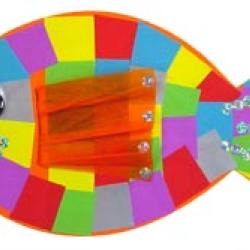
In this science and language arts activity, learners study fish anatomy and make their very own 3D paper fish. Learners write stories about their fish, answering questions such as 'Where does your fish live?' and 'How does it protect itself from danger?' The activity guide includes 5 pages of templates of different types of fish bodies and fins. [Activity is publicly available through a web crawler capture on Archive.org.]
- 5 to 10 minutes
- 45 to 60 minutes
- 1 cent - $1 per student
- Ages 6 - 11
- Activity, Lesson/Lesson Plan
- English
Quick Guide
Materials List (per student)
- Scissors
- Markers or crayons
- Tape or glue
- Googly eyes (optional)
- Fish Parts templates (pp 5-9 of pdf) printed on cardstock
- Parts of a Fish worksheet (page 4 of pdf)
- Writing paper
- Fish storybook (recommended: Fabulous Fishes by Susan Stockdale, or The Pout-Pout Fish by Dan Hanna)
Subjects
-
Life Sciences
-
Diversity of Life
- Animals
-
Evolution
- Mechanisms of Evolution
-
Diversity of Life
Informal Categories
- Animals
- Arts and Crafts
- Nature and Environment
Audience
To use this activity, learners need to:
- see
- see color
- read
- touch
Learning styles supported:
- Involves hands-on or lab activities
Other
Includes alignment to state and/or national standards:
Access Rights:
- Free access
By:
Rights:
- All rights reserved, Aquarium of the Bay,